Friday, July 26, 2013

A perfect day in Tel Aviv

We are quickly falling in love with Tel Aviv. After a couple of days, it feels like this city lacks the neuroses of Jerusalem, but represents the best successes of the State of Israel (i.e., a place where many Jews can live together in a pluralistic, productive, and satisfying way). I thought Tel Aviv would feel just like any other big city (on the beach), but today definitely showed us that while it might have a Miami exterior, Tel Aviv has a Jewish soul.

Because it is Friday, most of the museums close early, so we got an early start to Beit Hatesufot (The Diaspora Museum) on the University of Tel Aviv campus, so that we could have a complete visit there before it closed at 1 pm. We figured out the buses of Tel Aviv enough to get there (the bus system in Tel Aviv is interesting, because there are several bus companies with overlapping
routes, instead of just one city bus system). The Diaspora Museum was a wonderful surprise - a very deep, high quality exhibit (with an excellent audio guide) and an unexpected affirmation of the strength of the Jewish people. Although it is about the Diaspora, it tied together everything we have seen and done in Israel so perfectly. The exhibit is organized into 5 "gates" each of which reflects a reason that the Jews have remained strong, despite thousands of
years without a home. The gates (or themes) are family, community, faith, culture, and the Jewish people among the nations.  Each of these had included many things that really resonated with us. For example, in family, they showed a series of black and white images of Jewish homes from different times and places in history. In each, the only things in color were the Jewish objects (shabbat candlesticks, etc), which were
constant in every picture. It was a simple but effective way to convey one of the main themes of the museum -- there is amazing diversity among the Jews, but there is also something that ties us all together. In the faith section, they had over a dozen of models of synagogues throughout the world, from  China to Pennsylvania (Frank Lloyd Wright's synagogue). In culture, they presented the various ways that Jews have contributed to culture, in literature,  art, philosophy and so on, with an incredible exhibit of projects that students had made about their own family roots using various kinds of media, which were truly art in their own right. The Jewish people among the nations focused on the role Jews have played in various communities in the world, the first Diaspora community in Alexandria, Babylonia where the Jews wrote the Talmud, the expulsion from Spain, how Marranos from Spain settled in Amsterdam and built a thriving community there, how America came to be home to the world's second largest Jewish population. We also watched an amazing film about Benjamin of Tudela - a Jewish traveler from the 12th century, who visited Jewish communities in Europe, Africa, and Asia and wrote extensively about them. His writing is one of the largest sources of information we have about medieval Jewish communities. This "gate" also included a great interactive computer area where you could do research into your family name, genealogy, old photos they have archived and so on.

The final section of the museum was about the Return of the Jews to Israel. It highlighted how various groups of Jews and individuals made it out of the diaspora and made Israel into the largest Jewish population in the world. You got a strong sense of the Diaspora as the place where Jews lived when they had no homeland, and Israel as the place they live now that they can.

We left just as the museum was closing and wandered around the impressive University campus a bit while we looked for a shady spot for a picnic lunch. Jonah had gotten a postcard of the Alef-bet, with a place for each letter. We played a game of guessing which place went for each letter and remembering what we had done there. We were amazed how much the kids had remembered from our travels! As a bonus, Abe got to see the synagogue on the campus which was designed by Mario Botta. It was the first time he had seen a building by this architect in person, and he found it to be very inspiring.


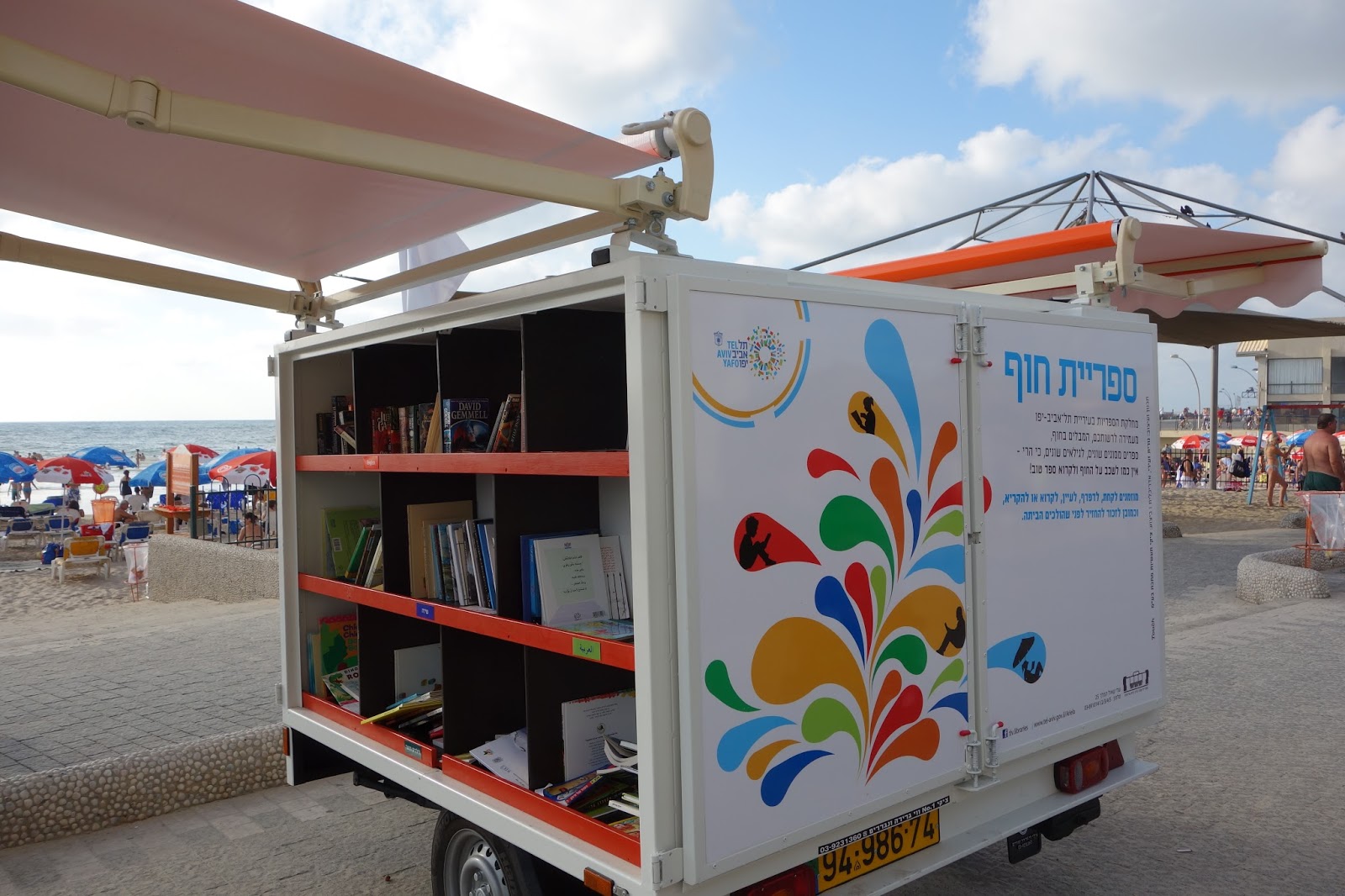


We then walked to the Namal (port) of Tel Aviv. It was a pretty long walk in the sun, so we were very glad when we finally reached the port. The namal is an awesome shopping, restaurant, entertainment complex which I have read is the second most visited site in Israel (after the Kotel). There is a huge curving boardwalk (think sand dunes made of wood), tons of places to eat etc, a Friday organic farmers market, and lots and lots of people walking, biking, riding scooters, swimming, etc everywhere. In addition to being a place to get some great ice cream, the Namal is a place where the viability and vibrancy of Israel as a Jewish state could not be more obvious. Just hearing all of these people speaking Hebrew (as if it hadn't been a mostly dead language just 100 years ago) is amazing. We ate ice cream soaked up the atmosphere, watched Russians playing chess by the beach, and went for a long swim (the beaches are fantastic - the sand is soft, there are showers and bathrooms, the water is warm). We browsed through the beach side book exchange (and picked up a book or two), and played on the playground.


But, the absolute highlight of the day, actually one of the best Jewish experiences I have ever had) came as the sun began to set, and we walked back up the boardwalk to where congregation Beit Tefillah holds Kabbalat Shabbat services. I'm sure I can't do justice to this experience. There were hundreds of people there, sitting on red lawn chairs, sitting on the ground, or standing in the back, facing out toward the water and the setting sun. There was an orchestra with a cello, a violin, a saxophone, a piano, a singer, a rabbi, and a sign language interpreter. They led a service mixed with beautiful songs like Lu Yehi (Let it Be) and What a Wonderful World (in Hebrew), seveal of which mentioned the sea and the beauty of the setting. The prayers and songs have never felt more appropriate. Some people just listened and others sang along, and everyone there (many of whom I am confident have never set foot in a synagogue and consider themselves to be 100% secular) had an amazing Jewish spiritual moment.

My new favorite way to start shabbat!
Finally, we went to a seaside cafe for dinner, and sat out on the boardwalk and ate delicious salad, garlic bread, etc, before walking home along the shore.


A sample of strange Tel Aviv signage:


Break dancing allowed on this section of the boardwalk
"Recycling, wifi, and guitar smashing behind you"
"You can play golf under your dog"
"You can play ball, but you cannot play ball"


Thursday, July 25, 2013

Tel Aviv Museum of Art and more...

Watching the construction next door
Today we began settling in to Tel Aviv. First order of business was to return the rental car (we had gotten in too late yesterday evening to do it then). The car had to be out of the lot by 7:30, so Abe and I left the kids sleeping at home and picked up the car, got gas (at a gas station located inside a garage - I'm sure that violates all kinds of codes) and gratefully dropped off the car, as Tel Aviv is a terrible place to drive (very crowded, lots of traffic, one way streets, people parked all over the streets and sidewalks). 
We came back and the kids were up, entertaining one another, and enjoying a leisurely morning of not needing to get up and out right away to move to a new place. A relaxed breakfast, a little Nick Jr on TV, and several loads of laundry later, we were ready to set out. We walked to the Tel Aviv Museum of Art - and had a fantastic visit there. Some highlights were a photography exhibit of photos from the Yom Kippur War, a design exhibit with some really cool optical illusions to make you rethink everyday objects in a new light, the impressionists and postimpressionists were nice, and the Art for All Ages (kids area) was fantastic. In the kids area, the exhibit was about wheels, so they had lots of activities related to this theme. They had paper cutout acrobats you could color and then roll down a ramp (Sylvia loved this). They also had a bicycle built for two which generated a cool graphic if two people pedaled at just the same rate (which Ella and Jonah enjoyed). 
"Inverse" movie - backwards colors,
backwards dialogue

Next, we met our friends Jeff and Irene and their kids for lunch. They just arrived in Israel yesterday and were coming in from Jerusalem to visit a relative in Herzelia. We were so glad to get to spend time with them despite jet lag and a very hectic day of traveling on their part. We had to walk a bit, but we found a really nice (and nicely airconditioned!) Italian restaurant on Ibn Gabriol Street, and enjoyed catching up over big bowls of pasta and a glass of wine. 

We came back to the apartment to rest a while (I think the laid back atmosphere of Tel Aviv must be rubbing off on us - a relaxed morning and a relaxed afternoon...shocking for us!), and eat, and then after dinner, just before it got dark, we headed down to the beach. Although there are still jellyfish warnings, the water was full of swimmers and Ella and Jonah joined them and had a blast. Toward the end, Sylvia got in on the action too. It's a beautiful beach with good waves, warm water, soft sand, nice showers as you exit, and we're looking forward to spending several more evenings there over the next couple of weeks.


Imitating the expressions
of the sculptures


Wednesday, July 24, 2013

Kibbutz Ketura and Tel Aviv

We started our day Kibbutz style, with breakfast in the communal dining room. Kibbutz Ketura is one of the last holdouts of kibbutzim to stick to the old communal ways (rather than move toward privatization, like Maoz Haim, the other kibbutz we visited, and many others have). So, most members still eat all of their meals in the dining room, a lively and friendly place (with decent, if simple, food). They had some American volunteers there helping out, making pancakes and omelets, in addition to the standard salads and breads.

After breakfast, Noa (a former kibbutz member, who is spending the summer back at Ketura working in the tourism division) gave us an amazing tour of the place. She showed us a bit of kibbutz life (which the kids were really interested in) and a bit of the industry (which Abe and I were really interested in). On the kibbutz life side, some of the highlights were the awesome library, the day cares and after school centers, the popsicles in the little market, the laundry, the synagogue (which is egalitarian and has been since the kibbutz was founded - which is rare in two ways, the second being that the kibbutz had a synagogue from the start while most kibbutzim were secular or anti-religious) and learning about how each person does more or less whatever job they want to do (either on or off the kibbutz), each person's work is valued equally, and each person gets the same amount of money each month from the kibbutz (as well as getting all basic needs taken care of - housing, food, education, medical, transportation, and more). Noa claimed it works pretty well (but then again, she left the kibbutz for city life, so I don't know...). The main industries of Ketura are date trees, dairy cows (we got to visit the 1 day old calfs!), tourism (they have a hotel and run seminars for camp groups, etc), a new solar field (unbelievably, the only one in Israel), and an algae farm (the only one in the world, she thought, from which they make cosmetics and algae pills which people believe are good for your skin, etc). They also have some smaller industries like an exotic fruit orchard, a center for nature and environmental studies, a verteranary clinic, independent artists, and more. It was really very cool to hear about a kibbutz which is thriving, has a fairly young and vibrant membership (150 members), has innovative ways of staying competitive in today's world, and so on. Ella has always been really intrigued by the kibbutz philosophy (I think most 13 year olds are socialists anyway), and by the end of the tour, she was ready to sign up as a volunteer!

We loaded up that rental car one last time and drove a couple of hours north, back to Sde Boker, where we had missed seeing Ben Gurion's house on the way down. We visited his humble kibbutz home (nicer than some kibbutz members' houses we've seen, but less than what a former prime ministers house might be), and watched a cool animated movie about his life, and looked at the small exhibit about his relationship with the Negev (which he really thought was critical to Israel) and the Negev today. Ben Gurion felt that the Negev was the only part of Israel where the Jews could start from scratch and build something totally their own, which is why he was inspired to spend his last 20 years there (this was also, by the way, the same reason the woman at the kibbutz cafe gave us for why they chose that location for their kibbutz, "to build something from nothing").

Back in the car for another hour and a half to get to Tel Aviv. As we got close, we kept our eyes out for a grocery store to stock up for our apartment. We found a street with a bakery, fruit and vegetable store, and grocery near Holon. We loaded up every nook and cranny of the car with groceries (but not before Sylvia attracted the attention of every woman who worked in the store - they couldn't get over how cute she was, they gathered in the aisles to admired her curl, etc. They were mostly Russian, so she enjoyed their attention in 2 languages she didn't understand).

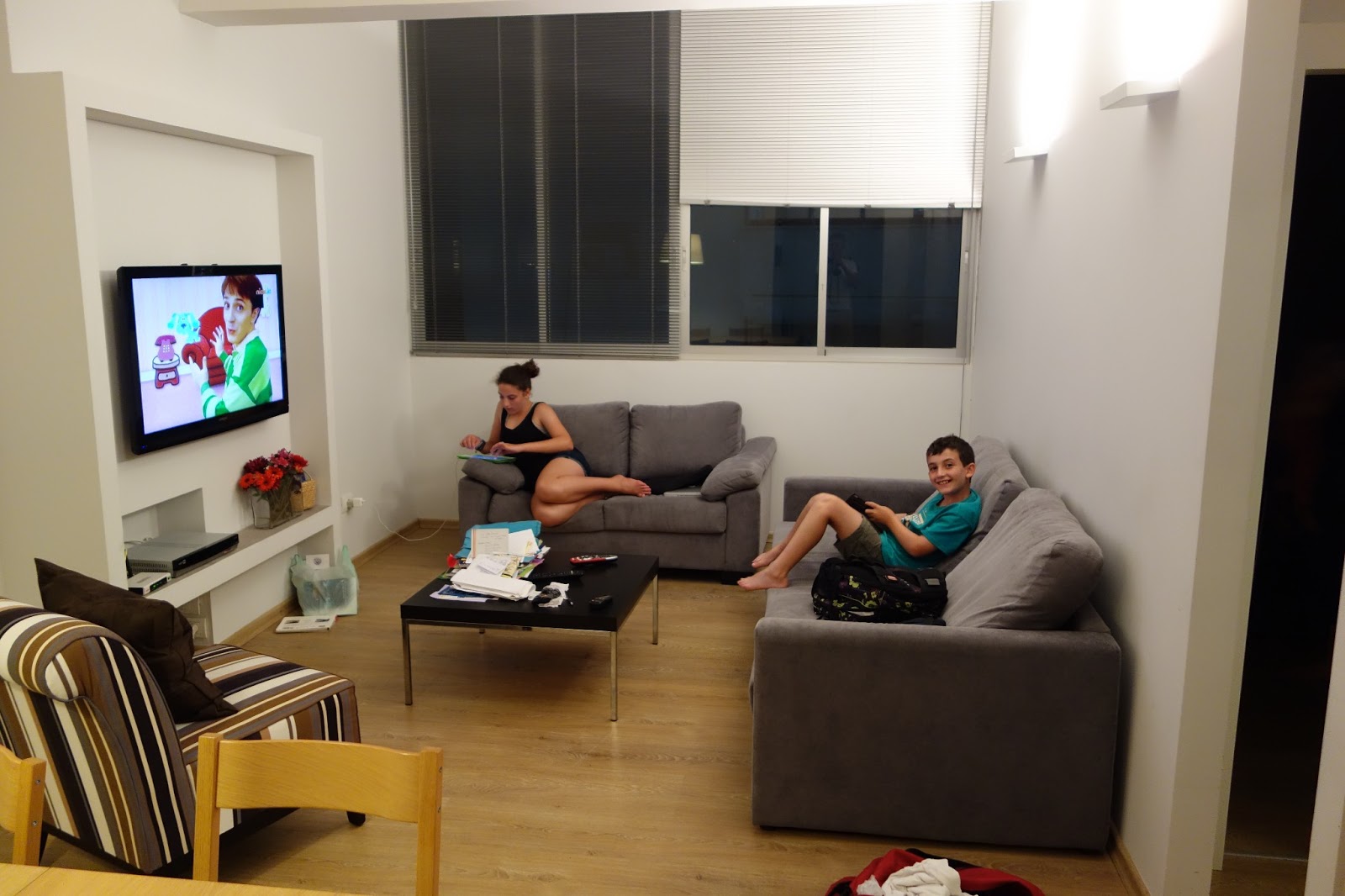
Finally, after driving through pretty intense traffic into Tel Aviv at 5 pm, and negotiating the many one way roads - none of which goes in the right direction to get to our street -- we made it to our apartment. The guy from the rental agency met us, showed us around, even helped us carry our luggage up. The apartment is great - 3 bedrooms (so we can welcome guests later this week), very modern and clean in an Ikea style, a popsicle store right downstairs, and in a neighborhood far cooler than we are. we got settled in, did some unpacking and laundry, enjoyed a home cooked meal (pasta) and then the kids went to bed while Abe and I went out to get the lay of the land. There are bars and restaurants everywhere you look, tons of shops (a 24/7 grocery on the corner), a 15 minute walk to the beach, where even at 10:30 pm people were swimming. What a completely different vibe from everywhere else we've been in Israel. Tel Aviv is clearly a city for having fun!


Checking out the algae farm

Admiring the popsicle selection at the kibbutz store

Outside the Kibbutz library

Watching the tanks practice in the desert on our drive north


Ben Gurion's house at Sde Boker


In Ben Gurion's study


A home cooked meal in our new home (temporarily)

Notice Nick Jr on in the background - this must be home!

and there is wifi...all is right with the world

Petra and Kibbutz Ketura

Dressing like bedouins to start the day
(actually, just a favorite game of
Sylvia's to wear pants on her head!)
Jordanian breakfast
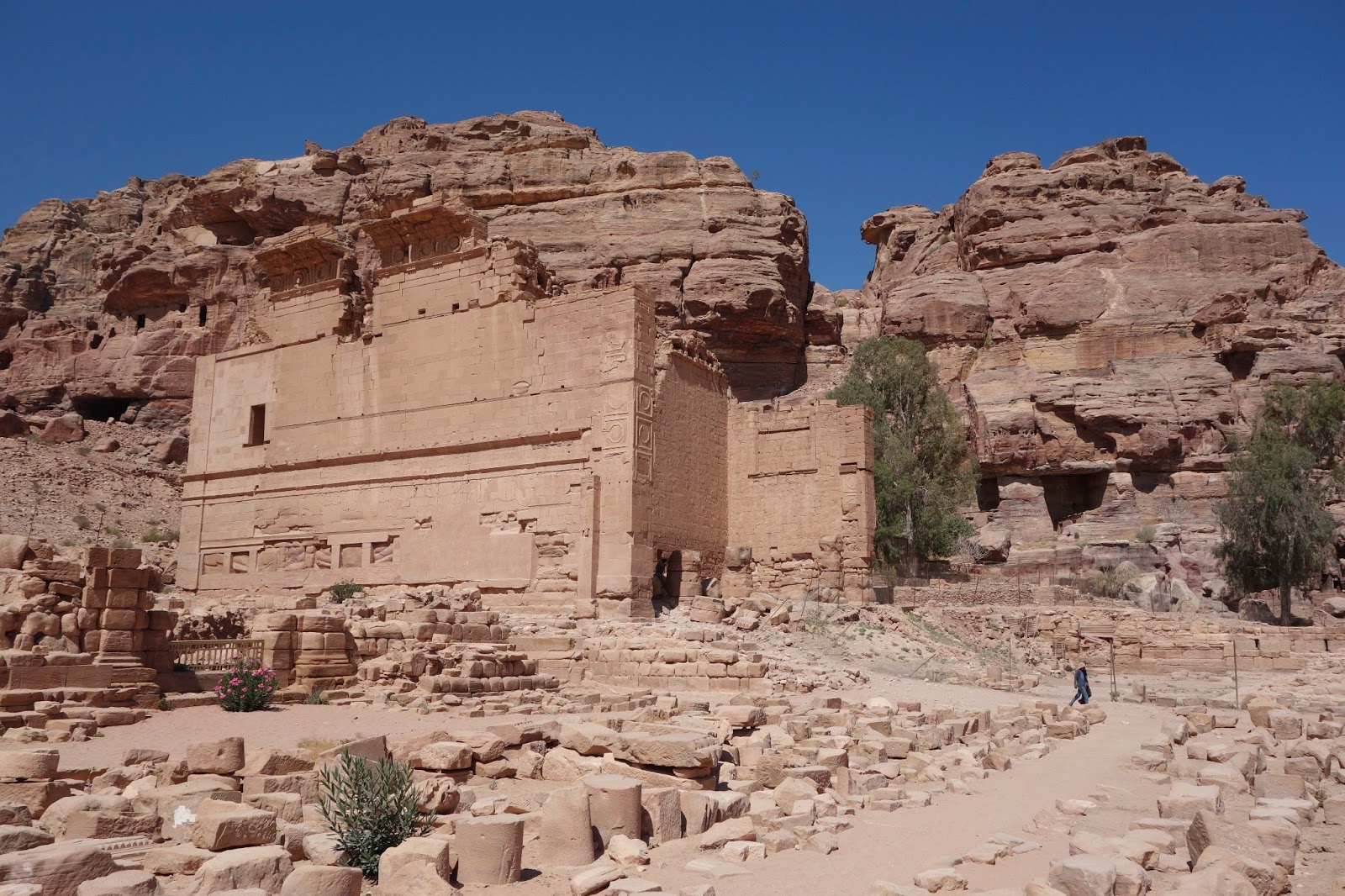
I’d wear out the W on my keyboard typing “wow” enough times to do justice to Petra. We woke up early this morning and enjoyed a great breakfast at the hotel – lots of variety, “best pancakes ever”, a pot of hot chocolate for the kids (“SO good”), and very gracious service. By 8 am we were heading into the ancient city of Petra. Built by the Nabateans around the 1st century BCE, Jordan was unknown by Western people for about 400 years (just the local Bedouins knew about it). In the early 1800’s, a Swiss adventurer posed as a local and rediscovered the lost city. It’s a city built into the dramatic rocks and cliffs that are found all around the area. You enter through the visitors center, which is really just a ticket counter and a bunch of shops, and start walking down a path past some “teaser” structures. For example, there are these huge piles of  square stones called Djin Blocks which the Nabateans believed housed spirits. You also walk past a couple of tombs – like the ancient Egyptians, the Nabateans apparently put a lot of focus on death rituals and arrangements, and out of 800 sites in Petra, 500 of them are tombs. Next, you walk down the Siq – a 1 or 2 km long passageway that leads to the ancient city. Along the sides of the Siq, carved into the rock cliffs are water channels. One of the great accomplishments of this civilization was that they conquered water – using dams and channels to provide a regular supply of water for the many thousands of people who lived in the city, despite the fact that the region experiences only a few days of rain a year, usually accompanied by flash floods. Finally, after walking though this impressive cliff-sided entryway, you reach the first (and probably grandest) of Petra’s major sites, the Treasury. This ornate royal tomb is huge – maybe like a 10 story building, and richly decorated in a style that blends Greek and other architectural influences (columns, various gods such as Isis), but unlike anything you’ve ever seen before because it is carved (like most of the buildings of Petra) out of a red rock cliff. There’s no way to describe how amazing this site is when you first glimpse it down the narrow Siq.


First view of the treasury


From this point on, you see amazing things carved out of the stones all around you. There are hundreds of tombs – the most impressive of which were for royalty, an amphitheater (built by the Nabateans but improved by the Romans) which held 8500 people (a third of the population of Petra), a column lined cardo, palaces, temples, and places of sacrifice. We walked in as far as we thought we could and safely get back out in time for our cab ride back to the border (the major thing we missed was the monastery. The only thing I didn’t love about Petra was the pushy donkey/horse/camel/cart drivers who pester you every 2 minutes to take a ride. First of all, how did they think we were going to ride a donkey with a stroller?! Second, when you ride, you miss all of the fun – climbing into the caves, discovering the “god blocks” carved into the walls, and so on. So, we walked and said “no thank you” a lot, and stopped for water breaks and once fresh squeezed orange juice form one of the vendors. Although it was a bumpy ride for Sylvia, she was mostly very content to sit in the stroller and look at the people, the animals, and the sites. Jonah loved the climbing – he thought it was really cool that you could go almost wherever you wanted, into caves, up rock cliffs, etc. Ella liked the mystery of the place – how it was very ancient, but rediscovered only recently; she was also happy to be able to give a piece of candy to a little boy selling postcards, which made him smile. Abe really appreciated seeing ancient architecture that was still intact – and hadn’t been destroyed over the years by earthquakes, war, conquering forces, etc.


An expert helping Ella keep the sun
off her face


Matching Indiana Jones hats


Sand at in a bottle - very popular here


We left the ancient city just as it was starting to get really hot, and found a little local restaurant for lunch  (we really wanted falafel, but “settled” for more delicious salads, grilled meat, rice, etc). We met Yasir back at the hotel and enjoyed another couple of hours of chatting with him as we drove back to the border -- we had some interesting conversations about politics, his views on the peace with Israel (he’s happy about it – his sister and her husband traveled to Israel and had a great time), the price of gasoline (it’s gone up a lot since Sadaam Hussein was toppled as Jordan used to get cheap gas from Iraq, and now it gets expensive gas from Saudi Arabia), and so on.


Crossing back to Israel
Waiting at the border security
Entertaining the tourists with the
bumblebee song
Dinner at Kibbutz Ketura
Watching the moon rise again -- this
time from Israel
The border crossing was quick on the Jordanian side, and a little slower on the Israel side (there were a couple of groups in front of us) and by 5 pm we were picking up our luggage from the hostel and back on the road. We arrived at Kibbutz Ketura just in time for a quick swim in the pool and yummy grilled cheese sandwiches in the cafĂ©. The woman who made the sandwiches, sat and talked with us a bit. She was one of the founding members of the Kibbutz in the 70’s. You could tell from talking to her that the shine has gone off the apple a bit for her (and maybe many kibbutz residents), as she talked somewhat wistfully about the heady, idealistic days of building something from nothing in an exciting time in the country. We all went outside and sat a bit longer as we watched the moon rise over the mountain (a big orange moon tonight) and Sylvia played on the playground. Finally, we decided to skip the night swim that was going on back at the pool and take it easy back in our very comfortable guest rooms instead.